
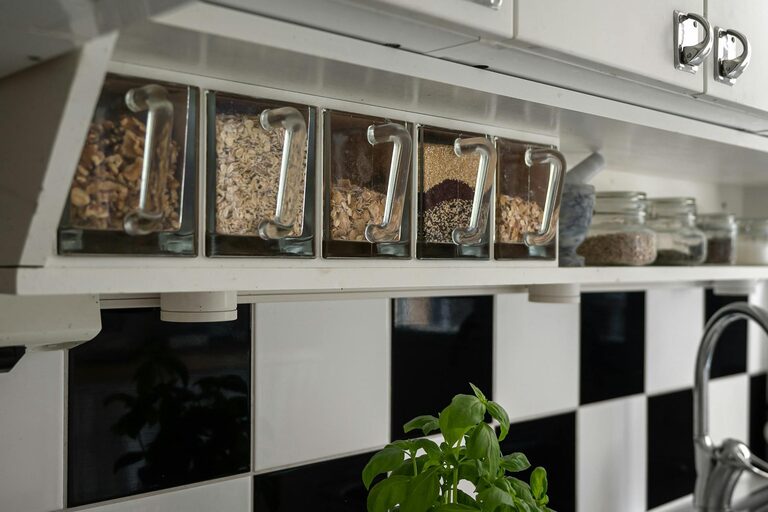
Making the most of a small kitchen can be challenging, but with a little creativity and some practical strategies, it’s entirely possible to create a space that is both functional and pleasant to use. Whether you’re working with a tiny apartment kitchen or a compact culinary corner, these simple tips will help you organise your kitchen effectively, saving time and reducing stress while you cook.
Assess and Declutter
Before adding any storage solutions or organising tools, start by decluttering your kitchen:
– Sort your items: Take everything out of your cabinets, drawers, and countertops. Decide what you use regularly, what you can store elsewhere, and what can be donated or discarded.
– Keep essentials only: Focus on keeping tools and utensils you use frequently. Extra gadgets or duplicates often take up valuable space.
– Clear the counters: Counters should be as clear as possible to provide ample workspace.
Decluttering is the foundation of good organisation. A tidy kitchen starts with fewer items that are easier to manage.
Maximise Vertical Space
Small kitchens often have limited floor and countertop areas, so using vertical space effectively is key.
– Wall-mounted shelves: Install shelves to hold plates, mugs, or spice racks. Open shelving not only saves space but also keeps your favourite items within easy reach.
– Hanging racks and hooks: Use hooks for pots, pans, utensils, or oven mitts. This technique frees up drawer and cabinet space.
– Magnetic strips: Attach magnetic strips to walls for knives, spice jars, or metal tools. They keep items visible and accessible without cluttering surfaces.
Vertical storage options make use of often-overlooked space and can add decorative elements to your kitchen.
Use Organisers Inside Cabinets and Drawers
Good internal organisation makes a huge difference.
– Drawer dividers: Keep utensils, cutlery, and small gadgets tidy with dividers. Customise them according to your needs.
– Stackable shelves: These create extra layers inside cabinets for cups, plates, and pantry items.
– Pull-out baskets or trays: Make deep drawers or cupboards more accessible by installing trays that slide out, making it easier to find and reach things.
– Clear containers: Use transparent containers for dry goods so you can easily identify contents and monitor stock levels.
Organisers help you make your cabinets and drawers work harder and stay neat.
Think Multi-Functional
Choosing or adapting items that serve more than one purpose helps reduce clutter.
– Collapsible or nesting cookware: Select pots and bowls that fit inside one another to save space.
– Multi-use appliances: Instead of multiple single-function devices, consider appliances that combine functions, such as an oven with a built-in microwave.
– Furniture with storage: If your kitchen has room for a small island or cart, pick one that offers shelves or drawers to keep extra items.
This approach not only saves space but also simplifies your cooking experience.
Optimise Countertop Space
While you want a clear work surface, some key items need to be accessible.
– Limit countertop appliances: Keep out only what you use daily. Store the rest in cabinets.
– Use tiered organisers: These are great for fruits, vegetables, or frequently reached-for spices.
– Install under-cabinet lighting: Good lighting creates an airy feel and helps keep the counters inviting and uncluttered.
By carefully selecting what stays on the counter, you keep your work area efficient.
Create Zones for Different Tasks
Organising your kitchen by task makes cooking smoother.
– Prep zone: Set aside space for chopping and mixing with easy access to knives, chopping boards, and mixing bowls.
– Cooking zone: Keep pots, pans, utensils, and spices near the stove.
– Cleaning zone: Store dish soap, sponges, and trash bins near the sink.
– Storage zone: Place dry foods, tins, and containers together in the pantry or cupboards.
Smart zoning means you spend less time moving around and more time cooking.
Label Everything
An easy but effective organisational tool is clear labelling.
– Label shelves and containers: This helps everyone in the household know where things belong.
– Use consistent labelling: Choose simple, readable labels that you can update as needed.
Labels reduce confusion and help maintain order.
Maintain Your Organised Kitchen
Organisation isn’t a one-time project—it needs regular attention.
– Weekly tidy-ups: Spend a few minutes each week popping items back where they belong.
– Seasonal reviews: Every few months, review your kitchen inventory and get rid of expired or unused items.
– Involve the household: Make tidiness everyone’s responsibility by encouraging shared habits.
By maintaining these small habits, your small kitchen will stay a functional, friendly space.
—
Organising a small kitchen effectively requires some planning, but the results are well worth the effort. By decluttering, using vertical and internal space wisely, choosing multi-functional items, and maintaining good habits, you can enjoy a neat and efficient kitchen that works well even in limited space. Happy organising!
About the Author